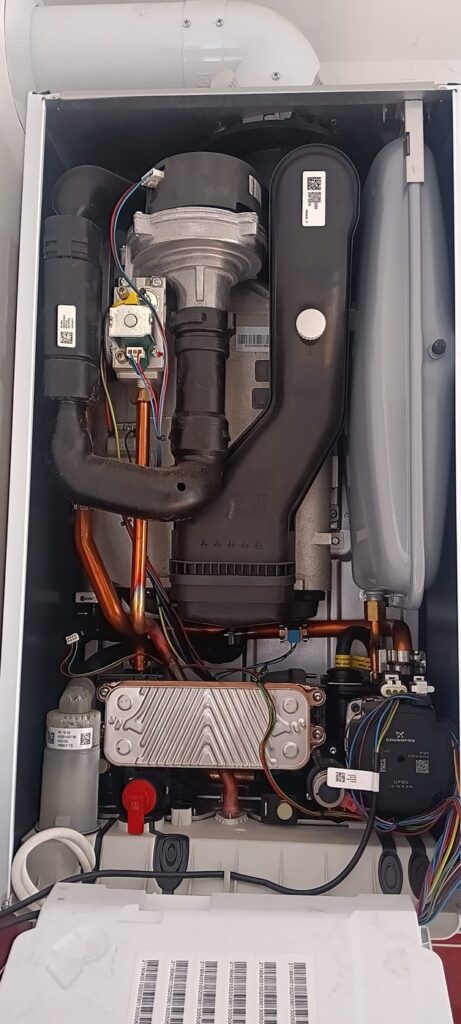
The first genuinely cold morning is the worst possible time to find out your boiler has a problem — and every year, it’s the same problem: something that a five-minute check in late summer would have caught. Here’s the pre-winter checklist I actually run through on jobs across Bow, Dagenham and the rest of East London, and why doing it now, while the diary is quiet, beats doing it in October when it isn’t.
Why bother now, in August?
Two reasons. First, the practical one: the moment the weather turns, service and repair bookings across East London pile up fast — by the time your boiler actually fails on a cold morning, you’re often queuing behind everyone else who left it too late. Booking now, while things are quiet, means you’re seen this month rather than competing for a slot in the cold snap. Second, East London’s hard water accelerates scale build-up inside boilers and pipework faster than in soft-water areas, so systems here tend to show winter strain earlier than the manufacturer’s glossy brochure suggests.
Have you booked your annual service yet?
This is the single biggest lever. An annual service checks gas pressure, the burner and flame picture, the flue, and every safety device — the things that quietly degrade over a year and cause a no-start on the first cold morning. It’s also usually a condition of keeping your manufacturer’s warranty valid, so skipping it can cost you twice. See our boiler service page, or our dedicated guide to servicing before winter for what’s actually involved.
Is your boiler pressure where it should be?
Have a look at the gauge on the front of the boiler. Most systems should sit around 1 to 1.5 bar when cold. If it’s below 1 bar, or you find yourself topping it up more than occasionally, that’s worth sorting before winter rather than during it — a boiler that loses pressure in a freezing spell is a boiler that stops heating your home in a freezing spell. Our boiler pressure guide walks through how to check and top it up safely, and what a pressure that keeps dropping usually means.
Do your radiators heat evenly?
Cold at the top, warm at the bottom is trapped air — a two-minute job with a radiator key. Cold at the bottom, warm at the top is usually sludge, and no amount of bleeding fixes that. In older East London stock — a lot of the Victorian and Edwardian terraces we work on in Bow E3 still have their original pipework in places — sludge build-up is common enough that we treat it as a routine winter-prep check, not an edge case. If several radiators are affected, or the system’s noisy and slow to warm up, it’s worth asking about a power flush before the heating’s running flat out every day.
Is your condensate pipe protected?
This is the classic “boiler died overnight for no reason” call we get on the first hard frost. The condensate pipe carries slightly acidic waste water out of the boiler, and where it runs outside — which on plenty of East London terraces and converted flats it does — it can freeze solid in a cold snap and shut the whole boiler down. Lagging it now, in August, takes ten minutes and costs very little. Our frozen condensate pipe guide covers how to lag it and, if it’s already frozen on the day, how to thaw it safely. If your boiler simply won’t fire up at all, our boiler won’t turn on guide gives the order of checks to run through before calling anyone out.
Do you know where your stopcock is?
Not a boiler question, but the same logic applies — find it now, not while water’s coming through the ceiling. Exposed pipes in lofts, garages and against outside walls are the ones most likely to freeze and split once the cold properly sets in. Our guide to stopping pipes freezing covers lagging, keeping the heating ticking over while you’re away, and what to do if a pipe does freeze or burst. For anything urgent, our plumbing team covers East London alongside our gas and heating work.
Landlord? There’s a second checklist for you
If you let a property, winter prep isn’t optional — it’s the same window to get your annual Landlord Gas Safety Certificate (CP12) renewed before it lapses, and to have the boiler serviced at the same visit so tenants aren’t the ones finding out it’s faulty on a Sunday night in December.
The five-minute pre-winter checklist
- Book the annual service now, while diaries are quiet
- Check the pressure gauge reads roughly 1–1.5 bar
- Bleed any radiators that are cold at the top
- Get sludge-affected radiators (cold at the bottom) looked at
- Lag the external condensate pipe and any exposed pipework in the loft or garage
- Know where your stopcock is, and check it turns
- Landlords: renew the CP12 before it expires, in the same visit as the service
None of this is complicated, and most of it takes minutes. The value is entirely in the timing — every item on this list is either free or cheap to sort in August, and expensive, urgent and stressful to sort in the middle of a cold snap.
Frequently asked questions
When should I book my boiler service before winter?
Late summer or early autumn, before the seasonal rush hits and while engineers have space in the diary — booking in August or September beats competing for a slot once the cold arrives.
Why did my boiler stop working overnight in cold weather?
The most common cause is a frozen external condensate pipe. Lagging it in advance is the fix; thawing it on the day is a temporary one.
Do I need a power flush before winter?
Only if your radiators show signs of sludge — cold at the bottom, slow to heat up, or a noisy, kettling boiler. Not every system needs one every year.
Is winter boiler prep different for landlords?
The technical checks are the same, but landlords also have a legal annual gas safety check (CP12) to renew — we can do this alongside the service in one visit.
About the author: J. Ahmed is the founder of Gas First Ltd and a Gas Safe registered engineer (587401), working across East London since 2016.