Power Flushing in East London
Cold radiators, slow-warming heating and sludge build-up cleared by Gas Safe registered engineers across East London. Call 07927 882561.
 Gas Safe Registered · 587401
Manufacturer Approved
Fully Insured
Same-Day Service
Local Engineers
Upfront cost — no obligation
Gas Safe Registered · 587401
Manufacturer Approved
Fully Insured
Same-Day Service
Local Engineers
Upfront cost — no obligation If your radiators are cold at the bottom, slow to warm up, or your heating just isn’t performing like it used to, the cause is often sludge and debris built up inside your system. Power flushing clears it out, restoring proper circulation so your radiators heat evenly, your boiler works less hard, and your energy bills come down. Gas First carries out professional power flushing across East London as part of keeping your central heating healthy.
Helpful reading: Do I need a power flush?
What does power flushing actually do to your central heating system?
Over time, rust, sludge and debris collect inside radiators and pipework, restricting the flow of hot water and creating cold spots. Power flushing pushes a high-flow mix of water and cleaning chemicals through the system to break up and flush out that build-up, leaving the system clean and circulating freely again.
Over time, rust, sludge and debris collect inside radiators and pipework, restricting the flow of hot water and creating cold spots.
How do you know if your central heating needs a power flush?
Common signs include radiators that are cold at the bottom but warm at the top, rooms that take a long time to heat, noises from the boiler or pipes, cloudy or dirty water when you bleed a radiator, and a boiler that frequently cuts out or loses pressure. If you’re noticing these, a power flush is often the fix — we’ll confirm whether it’s the right solution before carrying it out.
Common signs include radiators that are cold at the bottom but warm at the top, rooms that take a long time to heat, noises from the boiler or pipes…
Why Gas First for power flushing
A clean system heats more evenly, warms up faster and runs more efficiently, which can reduce your energy bills, while taking strain off your boiler and pump and reducing the risk of breakdowns. If you’re having a new boiler installed, flushing the existing system first is strongly recommended too — fitting a new boiler onto a sludged-up system can damage it and may affect the warranty, so we can carry out a power flush as part of a boiler installation, so your new boiler starts life on a clean system.
A clean system heats more evenly, warms up faster and runs more efficiently, which can reduce your energy bills, while taking strain off your boiler and…
A recent power flush in Dagenham
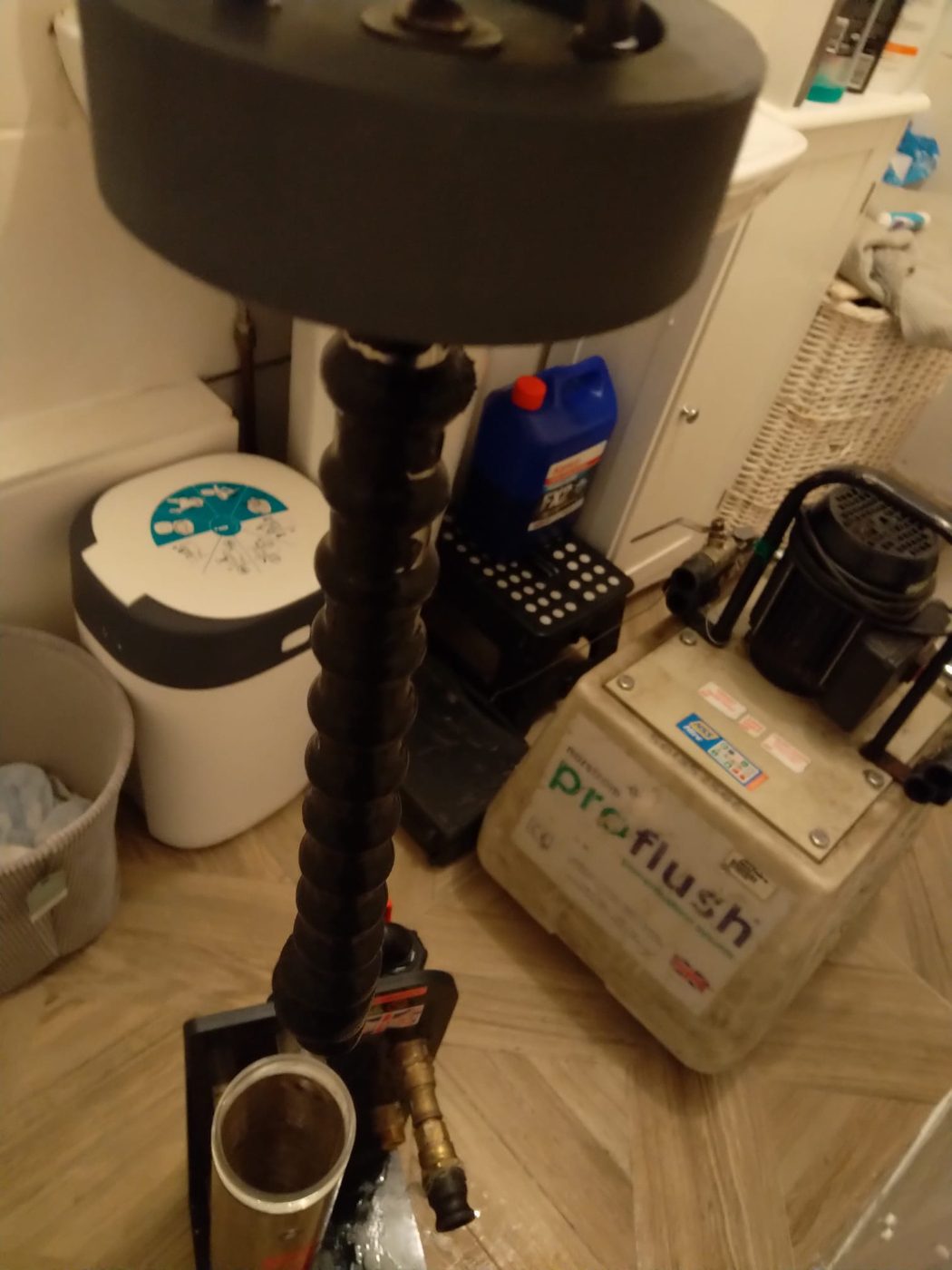
In Dagenham, a customer’s boiler kept losing pressure and cutting out, even after being reset. On inspection, we found the system was heavily contaminated with sludge, which was causing the boiler to overheat locally and trip out as a safety response. It was a smaller system, so we carried out a power flush over half a day, clearing the rust and debris that had built up inside the pipework and radiators. Once flushed through and refilled, the boiler held pressure properly and stopped cutting out.
Frequently Asked Questions
How do I know if I need a power flush?
Tell-tale signs are radiators cold at the bottom, slow-to-heat rooms, noisy pipes or boiler, a boiler that keeps cutting out or losing pressure, and dirty water when bleeding radiators. We'll assess your system and confirm whether a power flush is the right fix before going ahead.
How long does a power flush take?
It depends on the size of the system and how much build-up there is, but most domestic power flushes take a few hours to a full day. We'll give you a clear idea once we've seen your system.
Will a power flush fix cold radiators?
In most cases yes, where the cause is sludge and debris restricting flow. If a radiator is cold for another reason — a stuck valve, air, or a circulation fault — we'll diagnose that and advise the right fix instead.
Do I need a power flush before a new boiler?
It's strongly recommended. Fitting a new boiler to a dirty system can damage it and may affect the manufacturer warranty. We can flush the system as part of the installation.
Are your engineers Gas Safe registered?
Yes — all our work is carried out by Gas Safe registered engineers (registration 587401).
How much does a power flush cost in East London?
A power flush with Gas First starts from £399. The price depends on the number of radiators and the state of your system, which we assess first and confirm before starting, with no obligation.
What Our Customers Say
Rated 5 stars by customers across East London
“Boiler service and leak investigation, very thorough.”
Nikhil Ratanje | Hackney, East London
“Boiler service and bath tap replaced. Prompt, on time and fair price.”
Mohammed Miah | Romford, Essex
“Routine boiler service, friendly and fair pricing.”
Chi-Ling Ho | Ilford, East London
Get a Free Quote
Fill in the form and we'll call you back as soon as possible
Quick Booking
📞 We'll call you back
Why Choose Gas First Ltd?
Professional, reliable, and certified gas engineering services across East London
Gas Safe Registered
All work carried out by fully certified Gas Safe engineers
Fast Emergency Response
Quick attendance for urgent gas & heating issues across East London
Transparent Pricing
Fair quotes with no hidden charges — you know the cost upfront
5-Star Customer Service
Rated highly by homeowners & landlords across East London
Experienced Local Engineers
Skilled team covering all East London boroughs
Domestic & Commercial
Services for homes, rentals, and businesses
Areas We Cover
We provide gas, boiler, and plumbing services across East London and nearby areas.
Need a Reliable Gas Engineer in East London?
Contact Gas First Ltd today for fast, professional gas, boiler, and plumbing services across East London.