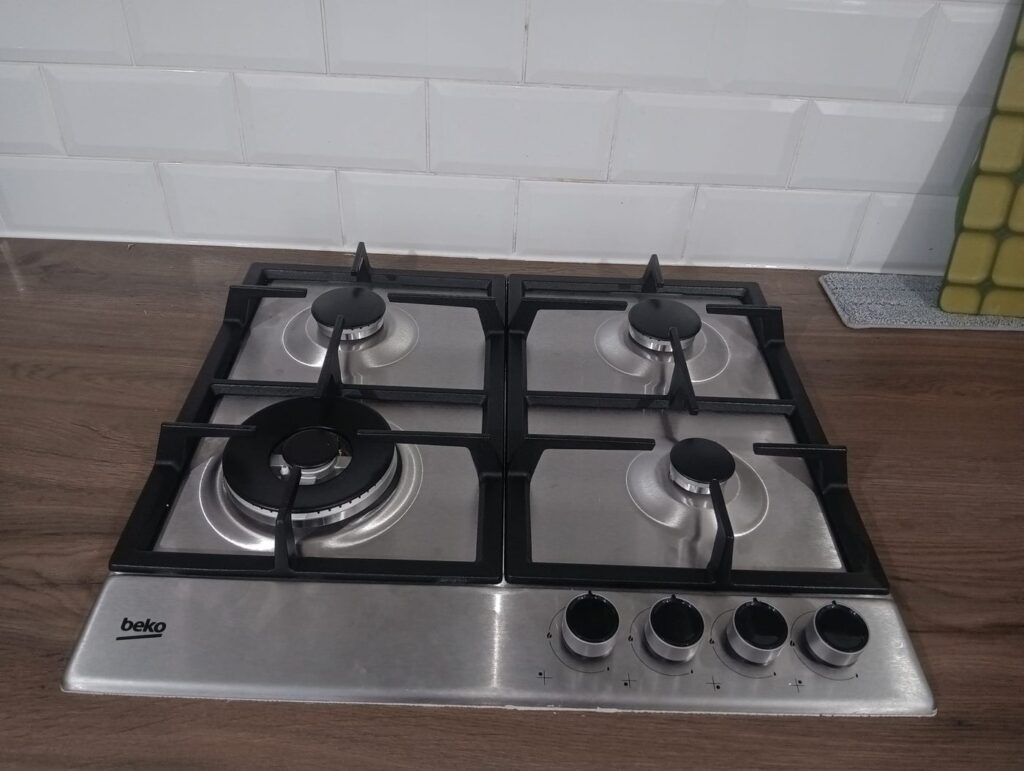
Having a new kitchen fitted? Your gas cooker has to be disconnected and reconnected by a Gas Safe registered engineer — your kitchen fitter cannot legally do it. It is the single most common hold-up we get called out for in East London: the units are out, the worktop is in, and the cooker is still sitting in the hallway because nobody booked the gas work. Here is how to sequence it properly, what a safe disconnection actually involves, and the things that catch people out in older Bow and Dagenham kitchens.
Can my kitchen fitter disconnect the gas cooker?
No — not unless that particular person is on the Gas Safe Register. Under the Gas Safety (Installation and Use) Regulations 1998, disconnecting a gas appliance is gas work in exactly the same way connecting one is. A very good kitchen fitter can rip out units, plumb in a sink and wire a socket, but the moment the job touches the gas supply, it needs a registered engineer.
This surprises people, because disconnection feels like the easy half of the job. It is not. Pulling a cooker off its bayonet fitting leaves a live gas point open in a room that is about to fill with dust, offcuts and power tools. Leaving that unsupervised is how avoidable incidents happen. A proper disconnection ends with the supply isolated and capped, tested, and clearly left safe for the work that follows.
If you are getting quotes, ask the fitter directly whether gas disconnection is included and who is doing it. If the answer is vague, assume it is not, and book it separately. Our gas cooker installation service covers both ends of the job.
What order should the work happen in?
Most kitchen jobs run into trouble because the gas visits are booked as an afterthought. The sequence that actually works looks like this:
- Visit one — disconnect and cap. Before the strip-out begins, the cooker or hob is disconnected, the gas point isolated and capped off, and a tightness test carried out so everyone knows the supply is sealed.
- The kitchen work. Units out, floor up, worktops in. This is where the gas point often needs to move — see below.
- Visit two — reconnect and test. Once the units and worktop are final, the appliance goes back, gets connected with the correct components, is tightness-tested, and is checked for a clean, correct flame before it is signed off.
The mistake is booking the reconnection for the same day the fitters finish. Kitchens overrun. If the worktop template is a day late, the cooker cannot go back, and you have paid for a visit that could not happen. Book the reconnection two or three days after the fitter’s promised finish date and you will almost always be right.
Does the gas point need to move for a new kitchen layout?
Very often, yes — and this is the bit that costs people money when it is discovered late. If the cooker is moving from one wall to another, or a freestanding cooker is being replaced with a built-in oven and a separate hob, the existing gas point is rarely in the right place. Moving or extending it is gas work, it takes longer than a straight reconnection, and it needs to happen before the units go in, not after.
Tell your engineer the new layout at the disconnection visit. Five minutes with the plan at that stage often saves a unit being cut about later.
What catches people out in older East London kitchens?
This is where local experience genuinely matters, and it is worth being specific.
Victorian terraces around Bow and Mile End (E3). A lot of these kitchens were extended into the back addition decades ago, and the cooker connection was made in rigid copper straight off a spur, with no bayonet point and no isolation tap at all. There is nothing to “unplug.” Isolating that supply means working further back down the pipe, sometimes at the meter, and it is a different job to popping a hose off a modern bayonet. If your cooker has never had a flexible hose behind it, mention that when you book — it changes how long the visit takes.
Becontree estate houses in Dagenham (RM10 and RM8). These have a recurring quirk: the gas point ends up boxed in behind a base unit during a previous refit, with the flexible hose threaded through a hole in the back panel. It works, but it means the isolation tap is not reachable in an emergency, which is exactly what it exists for. A kitchen refit is the ideal moment to bring that point back out to somewhere accessible, and we will usually recommend it.
Converted flats around Canary Wharf and the Isle of Dogs. Where a kitchen has been reconfigured more than once, we sometimes find a capped gas point behind a unit that nobody knew was there — a leftover from an old cooker position. If your fitter finds a capped pipe mid-strip-out, do not let anyone uncap it “to see.” Leave it, and have it checked.
Hard water across the whole patch. East London and Essex sit in a hard water area. It does not affect the cooker connection itself, but it does mean that if the kitchen work involves draining down for a new sink or moving pipework, it is a sensible moment to have the boiler looked at too — scale builds faster here than it does west of London. Plenty of customers combine the reconnection visit with an annual boiler service and save themselves a separate appointment.
What does a safe reconnection actually involve?
When we come back to put the appliance in, the visit runs through a fixed set of steps:
- Inspect the supply and the appliance. Pipework, isolation tap, and the condition of the appliance connection point.
- Use the correct components. A freestanding cooker needs an approved bayonet fitting and a flexible hose of the right length and rating — not stretched taut, not kinked, and not resting against a hot oven casing. Old hoses are replaced rather than reused.
- Stability. Freestanding cookers get a stability bracket or chain so the appliance cannot tip forward when an oven door is loaded or pulled on.
- Tightness test. A gas tightness test on the installation to confirm nothing is leaking.
- Combustion and flame check. Burners lit and checked for a clean, correct flame, and the appliance checked for anything that would make it unsafe to use.
- Explain and hand over. We show you where the isolation tap is and how to use it. If we find anything unsafe, you get told plainly what it is and what the options are.
Gas cooker and hob work across East London starts from £79. We confirm the cost before we start and there is no obligation. If you smell gas at any point during the kitchen work, stop, ventilate the room, avoid switches and flames, and call the National Gas Emergency line on 0800 111 999 — then talk to us about gas leak detection once the supply is safe.
What if I am a landlord refitting a rental kitchen?
Two things change. First, the reconnection is a good moment to bring the annual gas safety check forward and get everything done in one visit rather than two — see our guide to the landlord gas safety certificate (CP12). Second, keep the paperwork. If a new appliance goes in, the installation record and the safety certificate are what demonstrate the work was done properly, and they are worth far more than a receipt from whoever fitted the units.
How much notice do I need to book?
More than people think, particularly in late summer and autumn when kitchen work peaks. Book the disconnection when you book the fitter, not the week before. We work across East London from two bases — Bow E3 and Dagenham RM10 — covering Stratford, Mile End, Isle of Dogs, Canary Wharf, East Ham, Barking, Romford, Hornchurch, Upminster, Elm Park and Rainham.
Frequently asked questions
Can I disconnect the gas cooker myself if I am careful?
No. Disconnecting a gas appliance is gas work under the Gas Safety (Installation and Use) Regulations 1998 and must be done by a Gas Safe registered engineer, regardless of who owns the property.
How long does a gas cooker disconnection take?
A straightforward disconnection and cap-off on a modern bayonet point is usually a short visit. Older installations with rigid pipework and no isolation tap take longer, because the supply has to be isolated further back.
Do I need two separate visits for a kitchen refit?
Normally yes — one to disconnect and cap off before the strip-out, and one to reconnect and test once the units and worktop are finished. If the gas point also needs moving, that is usually done at the first visit.
Can I reuse the old flexible hose on the new cooker?
We replace it. Hoses perish and degrade with heat over time, and the correct length and rating depends on the appliance being fitted, so reusing an old one is a false economy.
How much does gas cooker disconnection and reconnection cost in East London?
Gas cooker and hob work starts from £79. The exact cost depends on the appliance and whether the gas point needs moving — we confirm it before we start, with no obligation.
Planning a kitchen and want the gas side handled properly? Call or WhatsApp 07927 882561. Gas First Ltd, Gas Safe registered 587401, working across East London since 2016.
About the author: J. Ahmed is the founder of Gas First Ltd and a Gas Safe registered engineer (587401), working across East London since 2016.